The gall's range is computed from the range of all hosts that the gall occurs on. In some cases we have evidence that the gall does not occur across the full range of the hosts and we will remove these places from the range. For undescribed species we will show the expected range based on hosts plus where the galls have been observed.
Our ID Notes may contain important tips necessary for distinguishing this gall
from similar galls and/or important information about the taxonomic status of
this gall inducer.
Created Feb 4, 2026 1:47 PM UTC
•
Last updated Feb 4, 2026 1:47 PM UTC
Synchytrium on Geranium Carolinianum
Clendenin, Ida
(1895)
Synchytrium on Geranium Carolinianum.
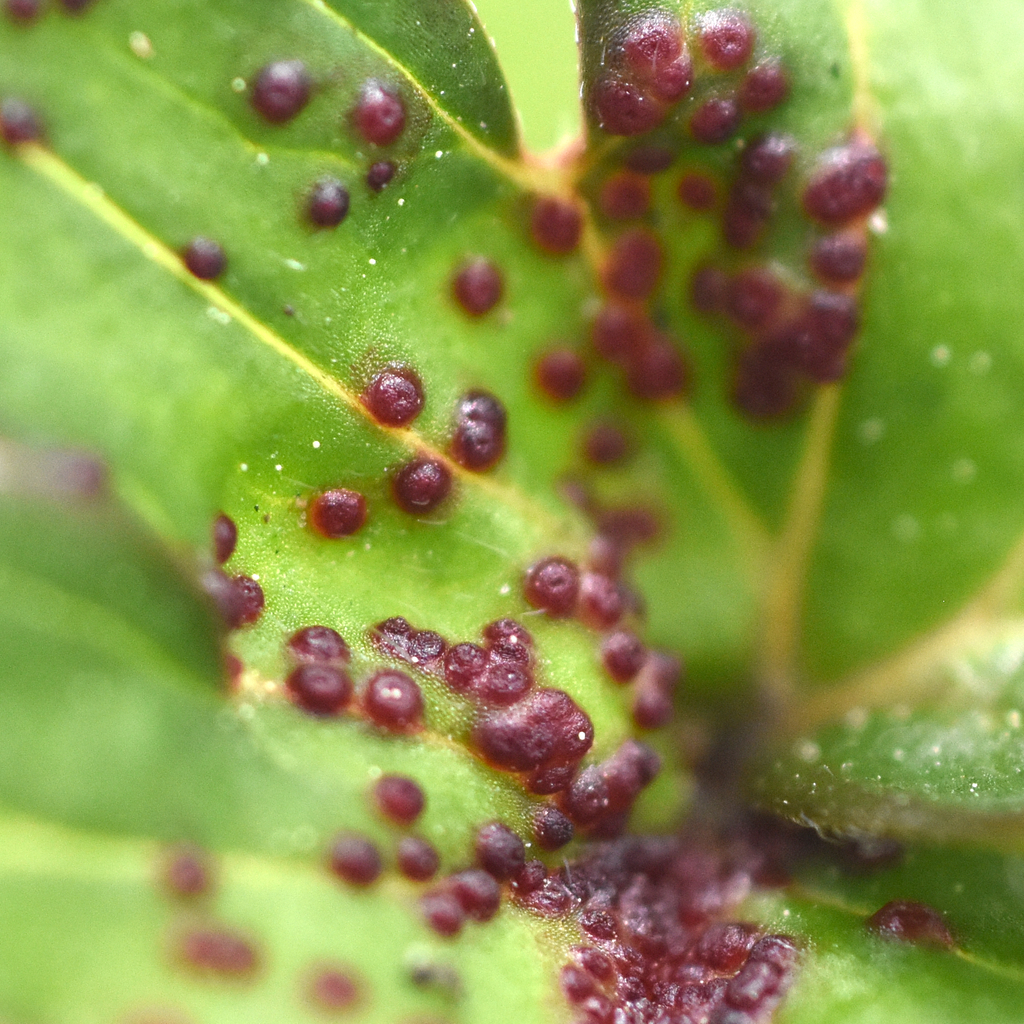
On the fourth of February of last year, some distorted leaves were gathered from Geranium Carolinianum L. growing in a low place in the botanical garden at Baton Rouge, La., and examination showed the distortions to be due to a Synchytrium. On the margins of some of the lobes, and extending in along the veins, on the lower surface, were purple-red swellings. The hypertrophy of the diseased parts was in many places so great as to cause a cupping of the upper surface. The older swollen portions were brown, and had a sticky feel, and the centers of the confluent pustules composing them were depressed, giving the appearance of small cups placed side by side ... three weeks later, the disease had spread to a number of individuals, and the red swellings were numerous on both petioles and blades. On leaves recently attacked, single red pustules were scattered here and there over the lower surface, occasionally on the upper, but on those longest subjected to the action of the fungus, the pustules had multiplied and become confluent, giving the appearance observed on the leaves first collected.