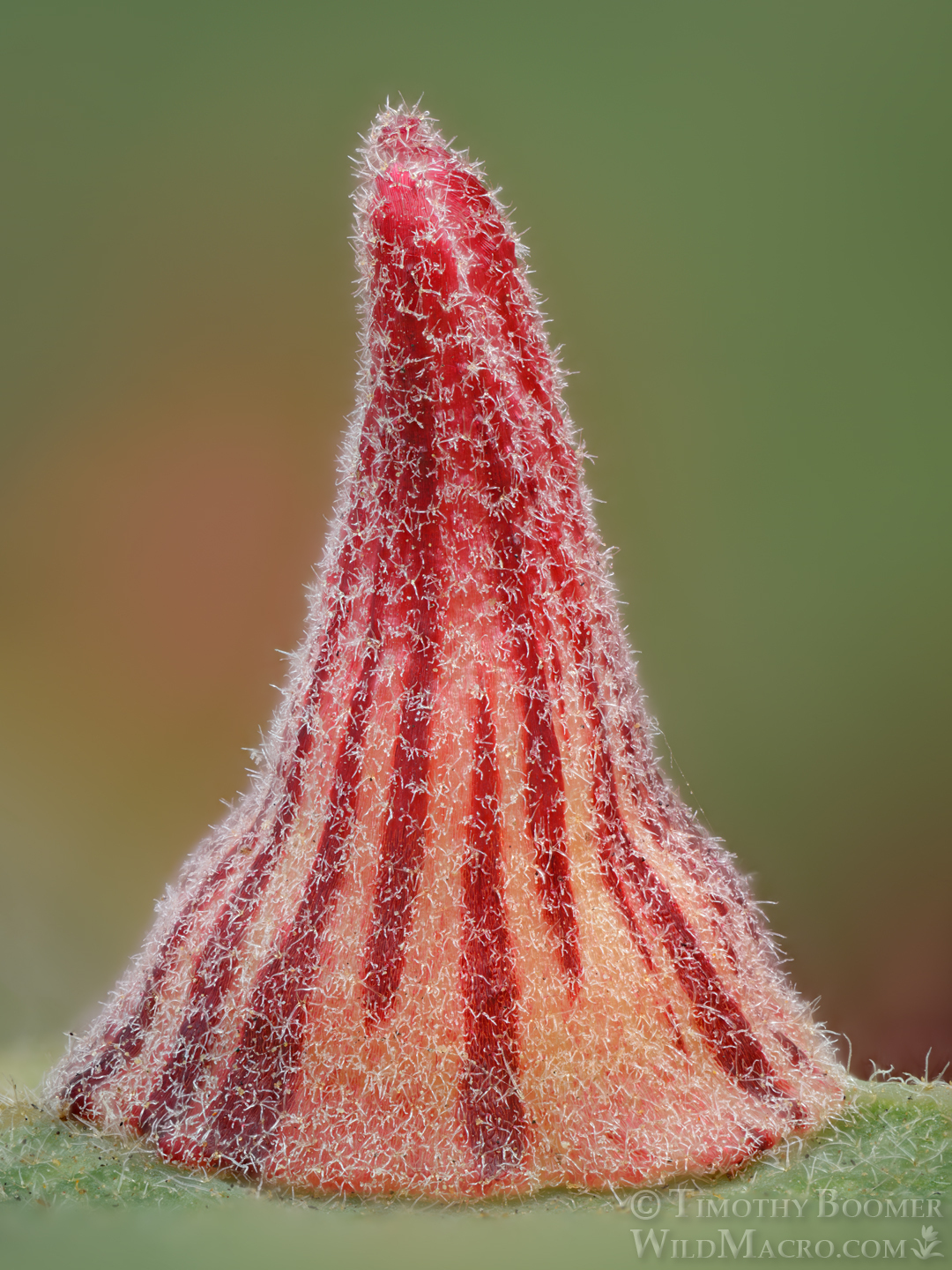
Feron atrimentum (agamic)
Hosts:
Quercus douglasii
Detachable: Detachable
Color: red, white, yellow
Texture: hairy, striped
Abundance: abundant
Shape: conical
Season: Summer, Fall
Alignment: erect
Walls:
Location: lower leaf, between leaf veins, leaf edge
Form:
Cells:
Possible Range:
Not an occurrence map: this shows where this gall's hosts grow. In most cases the
gall has not been documented throughout this area.
Loading map...
Synonymy (2)
| Name | Type | Notes |
|---|---|---|
| Andricus atrimentus (agamic) | scientific | Previous name |
| Striped Volcano Gall Wasp (unisexual generation) | scientific |
Related Galls (1)
Further Information (4)
Unisexual generation of Andricus atrimentus (Hymenoptera: Cynipidae)
- D C Dailey, C M Sprenger
(1973)
License: Public Domain / CC0
Cynipid Galls of the Pacific Slope
- LH Weld
(1957)
License: Public Domain / CC0
Plant Galls of the Western United States
- Russo, Ronald A.
(2021)
License: All Rights Reserved
Re-establishment of the Nearctic oak cynipid gall wasp genus Feron Kinsey, 1937 (Hymenoptera: Cynipidae: Cynipini), including the description of six new species
- Victor Cuesta-Porta, George Melika, James, A. Nicholls, Graham N. Stone, Juli Pujade-Villar
(2023)
License: CC-BY
See Also:




Created Feb 4, 2026 1:47 PM UTC
•
Last updated Sep 22, 2026 3:26 AM UTC