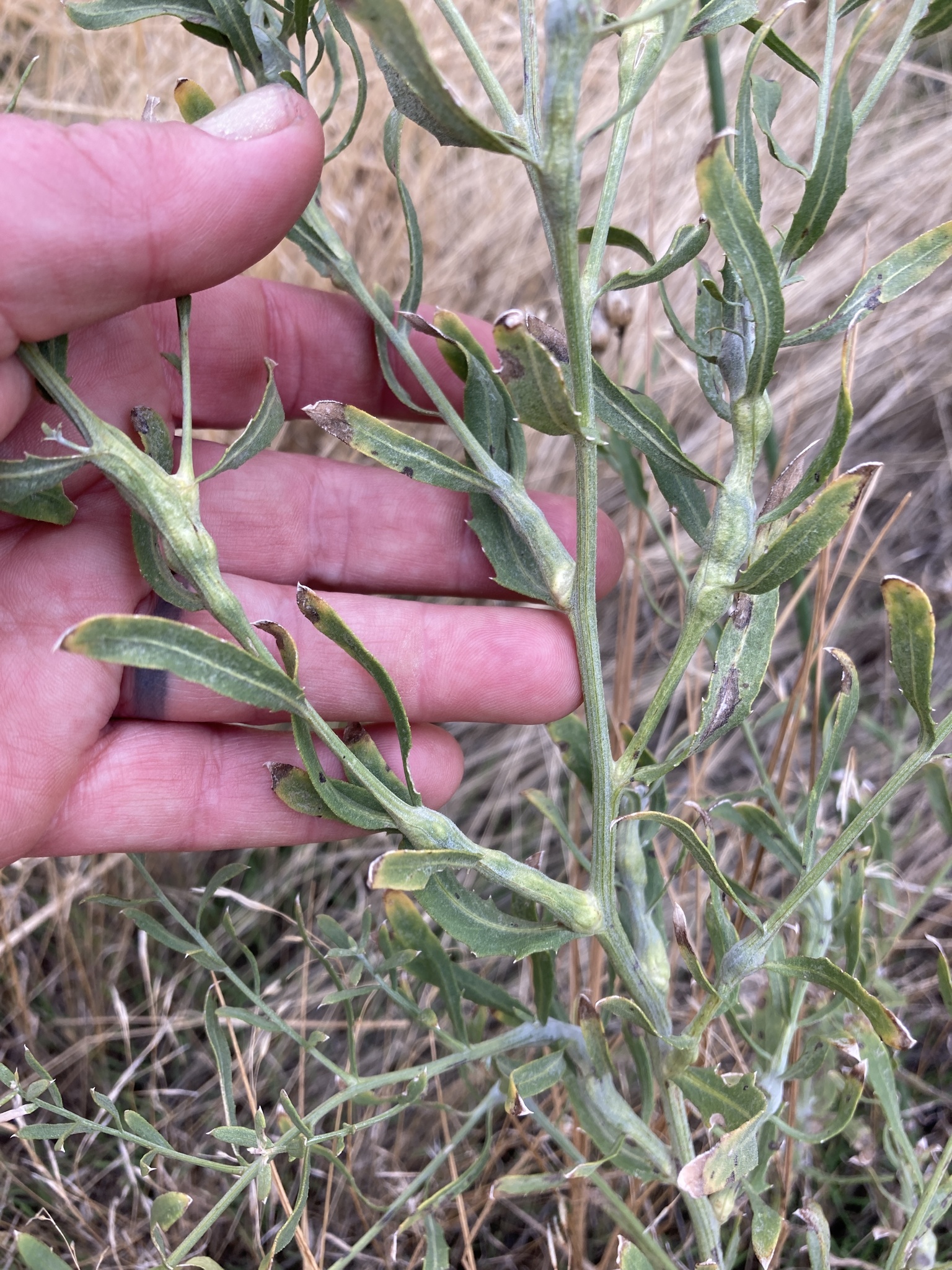
Aulacidea acroptilonica
Hosts:
Rhaponticum repens
Detachable: Integral
Color: brown, gray, yellow, green
Texture: stiff
Abundance: common
Shape: globular, spindle
Season: Summer, Fall
Alignment: integral
Walls: thick
Location: stem
Form: tapered swelling
Cells: monothalamous
Possible Range:
Not an occurrence map: this shows where this gall's hosts grow. In most cases the
gall has not been documented throughout this area.
Loading map...
Further Information (5)
Catalog of Rose Gall, Herb Gall, and Inquiline Gall Wasps (Hymenoptera:Cynipidae) of the United States,Canada, and Mexico
- Louis Nastasi, Andrew Deans
(2021)
License: CC-BY
Field Guide to the Herb and Bramble Gall Wasps of North America
- Louis Nastasi, Charles Davis
(2022)
License: CC-BY
Gall Wasps of Ukraine
- Melika, George
(2006)
License: All Rights Reserved
Herb gallwasp fauna of Iran (Hymenoptera: Cynipidae, Aylacini)
- George Melika, Younes Karimpour
(2012)
License: All Rights Reserved
Plant Parasites of Europe
- Willem N. Ellis
(2021)
License: CC-BY
See Also:




Created Feb 4, 2026 1:47 PM UTC
•
Last updated Mar 3, 2026 9:47 PM UTC