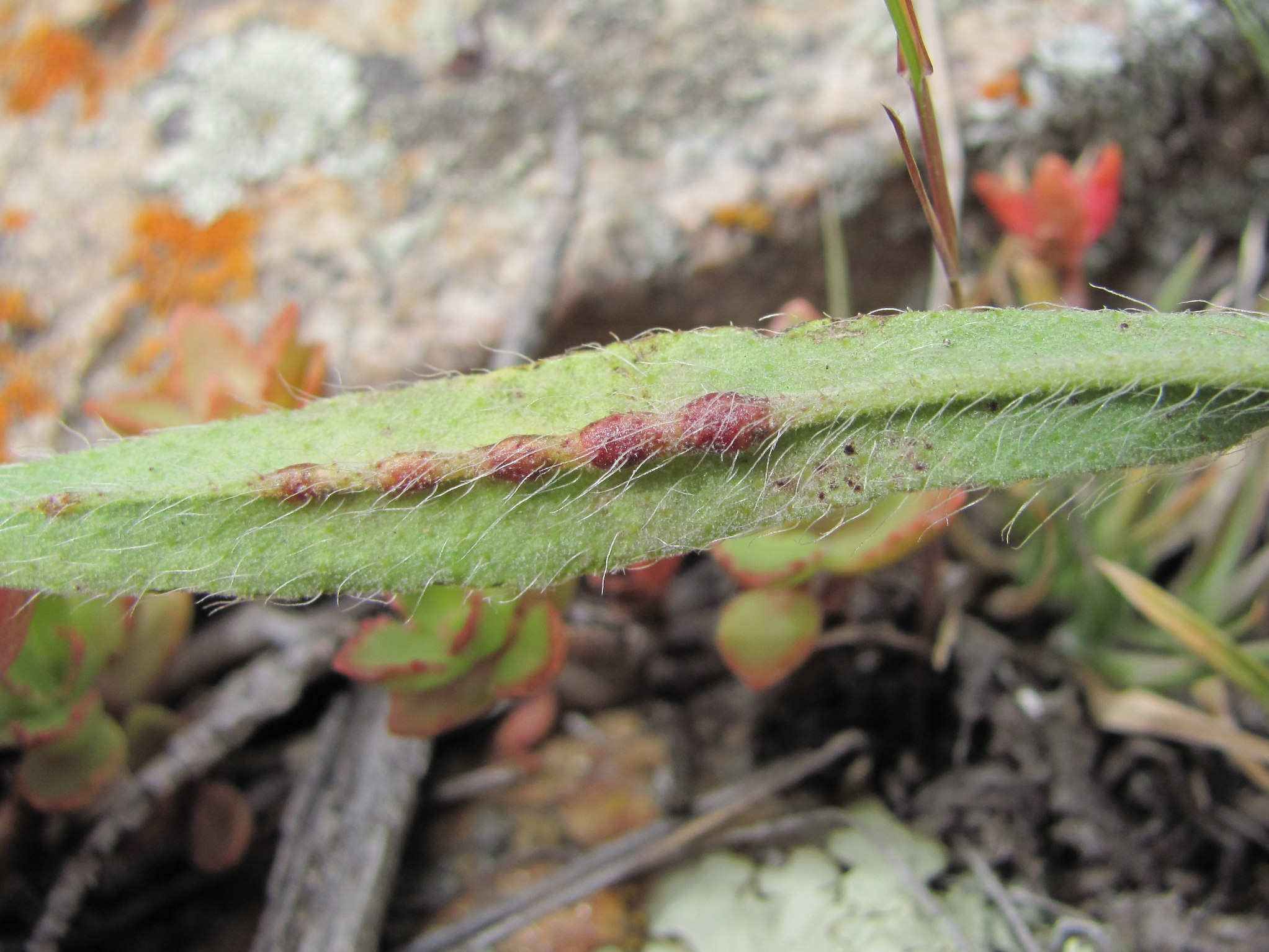
Aulacidea pilosellae
Detachable:
Color: white, yellow, green
Texture:
Abundance:
Shape:
Season:
Alignment:
Walls:
Location: leaf midrib
Form:
Cells:
Possible Range:
Not an occurrence map: this shows where this gall's hosts grow. In most cases the
gall has not been documented throughout this area.
Loading map...
Our ID Notes may contain important tips necessary for distinguishing this gall from similar galls and/or important information about the taxonomic status of this gall inducer.
Further Information (4)
Gallformers ID Notes
- Gallformers Contributors
(2026)
License: Public Domain / CC0
Catalog of Rose Gall, Herb Gall, and Inquiline Gall Wasps (Hymenoptera:Cynipidae) of the United States,Canada, and Mexico
- Louis Nastasi, Andrew Deans
(2021)
License: CC-BY
Gall Wasps of Ukraine
- Melika, George
(2006)
License: All Rights Reserved
Plant Parasites of Europe
- Willem N. Ellis
(2021)
License: CC-BY
See Also:




Created Feb 4, 2026 1:47 PM UTC
•
Last updated Feb 4, 2026 1:47 PM UTC