Limited browser support.
This browser version is not fully supported and some parts of Gallformers may not work correctly. For the best experience, update your browser. If you are using an older iPad/iPhone go yell at Apple for abandoning hardware that is still useful.
The gall's range is computed from the range of all hosts that the gall occurs on. In some cases we have evidence that the gall does not occur across the full range of the hosts and we will remove these places from the range. For undescribed species we will show the expected range based on hosts plus where the galls have been observed.
Not an occurrence map: this shows where this gall's hosts grow. In most cases the
gall has not been documented throughout this area.
Created Feb 4, 2026 1:47 PM UTC
•
Last updated Feb 4, 2026 1:47 PM UTC
The comparative morphology of the zoocecidia of Celtis occidentalis
Bertram Wells
(1916)
Pachypsylla venusta
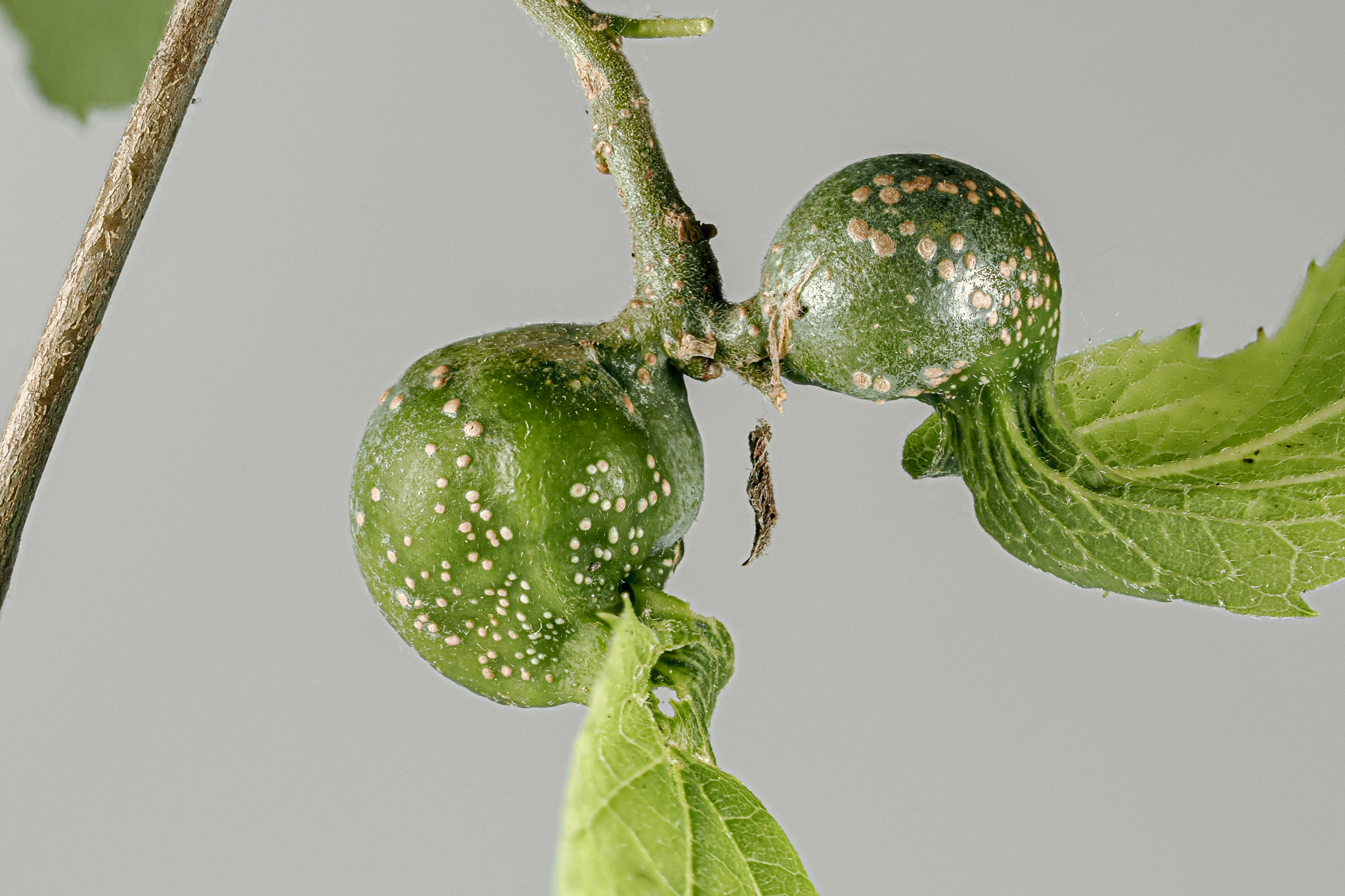
This gall is a large, hard, asymmetrical, pear-shaped modification of the petiole, variable in size according to the number of chambers found in the gall; the chamber number being directly related to the number of insects concerned in the formation of one gall 1-2.5 cm. long, 8 mm. -18 mm. wide. Surface minutely roughened, destitute of hairs. Yellowish gray to brownish in color. At one side, near the distal end of the gall is always a prominent concavity which is apt to be bordered by the remnants of the leaf blade. Interiorly, radiating from a central core, the walls give rise to conic chambers (PI. XVI, Fig. 7a). This core, however, is attached directly to the wall of the sunken area or sinus, above mentioned. These chambers vary in number from 3 to 14. The radiating walls are very thin near the periphery where they join the hard outer shelL Fig. 7b shows the gall with the side removed. The chambers are nearly filled with a white, flocculent, waxen mass, a secretion of the nymphs. The pupae all emerge through the thin wall of the sunken area in the fall, and after the last ecdysis the insects fly to the bark, where they spend the winter. These galls are not common, the writer's entire collection numbering but a half dozen. They have not been seen in Ohio.